Newcomb’s Wildflower Guide: A Comprehensive Overview
Newcomb’s Wildflower Guide, authored by Lawrence Newcomb and Gordon Morrison, remains a cornerstone resource for plant enthusiasts.
Available on platforms like Amazon, this guide offers a detailed approach to wildflower identification, fostering a deeper connection with nature’s beauty.
Newcomb’s Wildflower Guide stands as a remarkably accessible and enduring resource for anyone venturing into the captivating world of wildflower identification. First published decades ago, it continues to be a favorite among both amateur naturalists and seasoned botanists, offering a uniquely effective system for unraveling the mysteries of plant life.
Unlike many field guides that rely heavily on visual comparisons, Newcomb’s employs a dichotomous key – a series of paired choices that progressively narrow down possibilities until a specific plant is identified. This method, while initially seeming daunting, empowers users to actively participate in the identification process, fostering a deeper understanding of botanical characteristics.
The guide’s enduring popularity stems from its comprehensive coverage, detailed illustrations, and user-friendly approach. It’s more than just a catalog of flowers; it’s a tool for learning how to observe and understand the natural world around us, readily available for purchase through retailers like Amazon.
History and Authorship
Newcomb’s Wildflower Guide represents a collaborative effort born from a passion for botany and a desire to make wildflower identification accessible to a wider audience. The original work was primarily the vision of Lawrence Newcomb, a dedicated amateur botanist who meticulously developed the innovative dichotomous key system at the heart of the guide.
However, the project truly blossomed with the involvement of Gordon Morrison, a professional botanist and illustrator. Morrison refined Newcomb’s key, expanded the guide’s scope, and contributed the exquisite botanical illustrations that are integral to its success.
Published in 1977, the guide quickly gained recognition for its unique approach and comprehensive coverage. It has since undergone several revisions and remains a widely used resource, readily available for purchase, including through Amazon, continuing the legacy of its dedicated authors.
Lawrence Newcomb and Gordon Morrison
Lawrence Newcomb, the initial driving force behind the guide, was a self-taught botanist whose dedication led to the creation of a revolutionary identification key. His innovative approach focused on observable characteristics, making wildflower identification less daunting for amateur enthusiasts. Newcomb’s meticulous work laid the foundation for the guide’s enduring success.
Gordon Morrison, a professional botanist and skilled illustrator, significantly expanded and refined Newcomb’s original concept. He brought academic rigor and artistic talent to the project, enhancing the key’s accuracy and adding detailed botanical illustrations that are crucial for visual identification.
Their combined expertise resulted in a guide that balances scientific precision with user-friendliness, making it a valuable tool for both beginners and experienced plant lovers. The collaboration between these two individuals is central to the guide’s lasting impact and availability, like on Amazon.
Key Features of the Guide
Newcomb’s Wildflower Guide distinguishes itself through its unique identification key, built upon a series of paired choices – a dichotomous key. This system allows users to progressively narrow down possibilities based on easily observable plant characteristics, eliminating guesswork.
The guide’s detailed botanical illustrations, meticulously crafted, are essential for accurate species identification. Complementing these visuals are clear and concise species descriptions, providing crucial information about each plant’s morphology and habitat.
Furthermore, range maps illustrate the geographical distribution of each wildflower, while habitat information offers insights into where specific species are likely to be found. Available for purchase, including on Amazon, the guide’s comprehensive nature makes it an invaluable resource for anyone interested in exploring the world of wildflowers.
The Newcomb’s Wildflower Identification Key
Newcomb’s guide features a revolutionary dichotomous key, enabling precise wildflower identification through a progressive series of paired choices based on plant features.
Understanding Dichotomous Keys
Dichotomous keys are fundamental tools in biological identification, and Newcomb’s Wildflower Guide brilliantly employs this method. The term “dichotomous” signifies “divided into two parts,” perfectly describing how these keys function. Users are presented with a pair of contrasting statements about a plant’s characteristics – for example, “Leaves opposite or alternate?” or “Flowers with five petals or more?”
Choosing the statement that accurately describes the specimen directs you to another pair of choices, progressively narrowing down the possibilities. This branching process continues until the plant is identified. It’s crucial to carefully observe the wildflower and select the most accurate description, as an incorrect choice will lead to misidentification.
Unlike traditional keys relying on technical terminology, Newcomb’s key utilizes easily observable characteristics, making it accessible to beginners. Mastering this key unlocks a world of botanical discovery, empowering anyone to confidently name the wildflowers they encounter.
How to Use the Newcomb’s Key Effectively
To maximize success with Newcomb’s Wildflower Guide’s key, begin with a complete wildflower specimen, including leaves, stems, and flowers. Start at Step 1 and meticulously read each pair of choices. Don’t assume; carefully observe the plant and select the option that best fits, even if it’s not a perfect match.
If unsure, revisit the plant and re-examine the characteristic in question. Accurate observation is paramount. Keep a notebook to record your choices as you progress through the key – this helps backtrack if needed. Don’t skip steps!
Remember, the key leads to numbered species descriptions. Consult these descriptions and compare them to your specimen, verifying the identification with illustrations. Patience and attention to detail are key to unlocking the guide’s full potential and confidently identifying wildflowers.
Step-by-Step Guide to Keying Out Wildflowers
Step 1: Gather a complete specimen – leaves, stem, flowers, and fruit if present. Step 2: Begin at the very first couplet in the key. Read both choices carefully. Step 3: Determine which choice best describes your plant, and proceed to the corresponding number.
Step 4: Continue this process, meticulously comparing your plant to each successive couplet. Step 5: If you reach a couplet where neither choice seems to fit, double-check your previous selections.
Step 6: Eventually, you’ll arrive at a number leading to a species description. Step 7: Verify your identification by comparing the description and illustrations to your specimen. Remember, careful observation and patience are crucial for accurate results!
Plant Families Covered in the Guide
Newcomb’s Wildflower Guide expertly covers prominent families like Asteraceae, Fabaceae, Rosaceae, and Lamiaceae, providing detailed keys and descriptions for diverse floral species.
Asteraceae (Sunflower Family)
Newcomb’s Wildflower Guide dedicates significant attention to the Asteraceae, commonly known as the Sunflower Family, a remarkably diverse group of flowering plants. This family is characterized by its composite flower heads, appearing as single blooms but actually consisting of numerous tiny individual flowers.
The guide meticulously details identifying features within Asteraceae, focusing on variations in leaf shape, arrangement, and the structure of the flower heads themselves. Users will learn to differentiate between ray florets (the petal-like structures) and disc florets (the central part of the sunflower-like head).
Newcomb and Morrison’s work provides keys to distinguish between genera like Aster, Solidago (Goldenrod), and Echinacea (Coneflower), highlighting key characteristics for accurate identification. The guide’s illustrations and descriptions are crucial for navigating the complexities of this widespread and ecologically important plant family, found in various habitats across North America.
Fabaceae (Legume Family)
Newcomb’s Wildflower Guide provides a thorough exploration of the Fabaceae, or Legume Family, a group vital for both ecological and agricultural reasons. This family is easily recognized by its characteristic pea-like flowers and distinctive fruit – the legume, or pod.
The guide emphasizes using floral structure, specifically the arrangement of petals and stamens, to differentiate between various legume species. It details how to observe the ‘keel’ petal, a unique feature of Fabaceae flowers, and the number of stamens as key identification points.
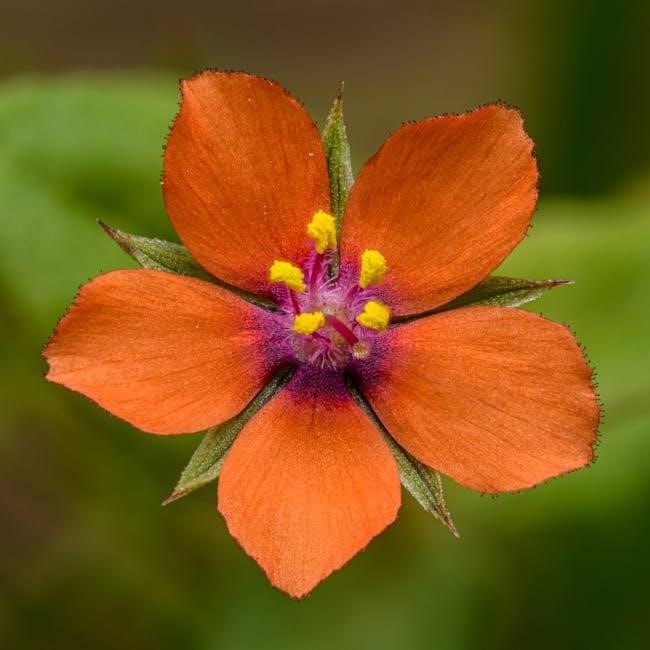
Newcomb and Morrison’s approach helps users distinguish between genera such as Trifolium (Clover), Lupinus (Lupine), and Vicia (Vetch). The guide’s detailed descriptions and illustrations aid in recognizing leaf arrangements and the diverse forms of legume pods, crucial for accurate plant identification in the field.
Rosaceae (Rose Family)
Newcomb’s Wildflower Guide dedicates significant attention to the Rosaceae, or Rose Family, a diverse group encompassing familiar plants like roses, strawberries, and apples. The guide highlights the family’s defining characteristics: flowers with five petals, numerous stamens, and a cup-shaped receptacle supporting the flower.
Newcomb and Morrison’s keying system focuses on subtle differences in leaf structure – whether leaves are compound or simple, and the arrangement of leaflets – to navigate the Rosaceae. The guide emphasizes observing the presence and type of prickles or thorns, a common feature in many rose family members.
Users learn to differentiate between genera like Rosa (Roses), Fragaria (Strawberries), and Geum (Avens) through careful examination of floral parts and fruit types. Detailed illustrations and descriptions assist in recognizing the varied forms of rose hips and other fruits, aiding accurate field identification.
Lamiaceae (Mint Family)
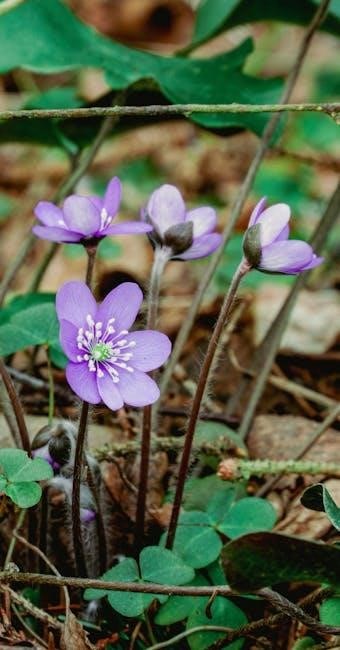
Newcomb’s Wildflower Guide thoroughly covers the Lamiaceae, commonly known as the Mint Family, recognizable by their square stems and opposite leaves. The guide emphasizes the distinctive floral structure – a two-lipped, often tubular flower, frequently exhibiting vibrant colors to attract pollinators.
Utilizing the Newcomb’s key, users learn to distinguish Lamiaceae members by examining leaf shape, the presence of hairs, and the arrangement of flowers in whorls or spikes. The guide highlights the aromatic qualities of many mint family plants, encouraging cautious observation and scent identification.
Genera like Mentha (Mint), Salvia (Sage), and Lamium (Dead-nettle) are detailed with precise illustrations and descriptions, focusing on variations in calyx shape and flower lip structure. Recognizing these nuances is crucial for accurate identification in the field, as detailed within the guide.
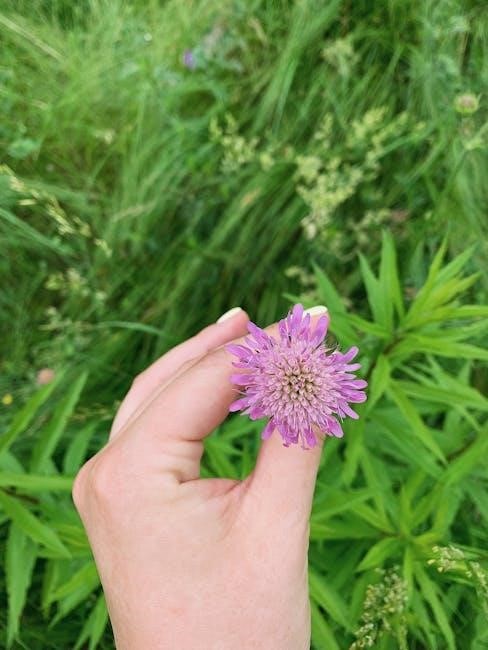
Using the Illustrations and Descriptions
Newcomb’s Wildflower Guide excels with detailed botanical illustrations paired with clear, concise species descriptions, aiding accurate plant identification and understanding.
Detailed Botanical Illustrations
Newcomb’s Wildflower Guide distinguishes itself through exceptionally detailed botanical illustrations, meticulously crafted to showcase the defining characteristics of each plant species. These aren’t merely artistic renderings; they are precise visual keys designed to aid in accurate identification.
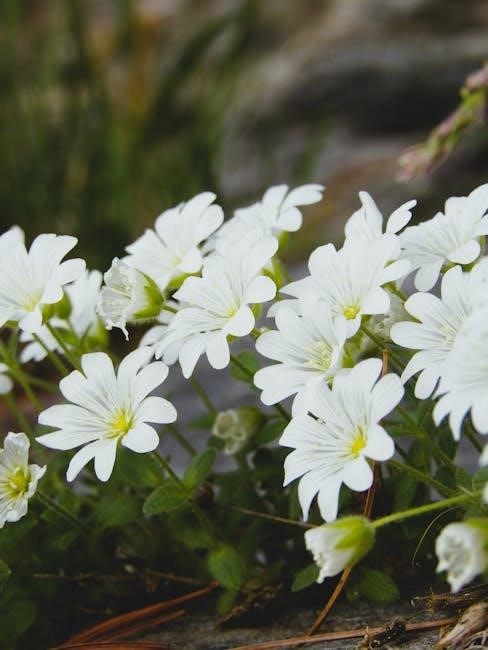
The illustrations focus on crucial features like leaf arrangement, flower structure, petal shape, and overall plant form. They go beyond simple depictions, often highlighting subtle nuances that differentiate closely related species.
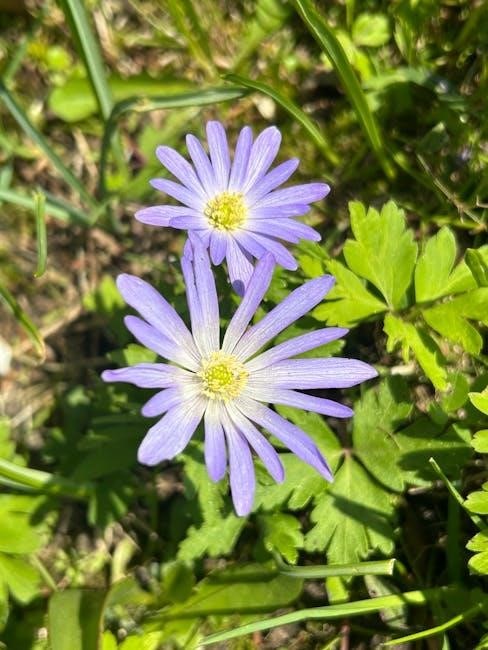
These visual aids are particularly valuable for beginners, providing a concrete reference point when navigating the often-complex terminology of botanical descriptions. The quality and accuracy of the illustrations are consistently praised, making them an integral component of the guide’s effectiveness. They allow users to visually confirm their identifications, building confidence and fostering a deeper appreciation for the intricacies of the plant kingdom.
Clear and Concise Species Descriptions
Alongside the detailed illustrations, Newcomb’s Wildflower Guide provides clear and concise species descriptions, carefully balancing botanical precision with accessibility for amateur naturalists. These descriptions avoid overly technical jargon where possible, opting for language that is understandable to a broad audience.
Each entry typically includes information on the plant’s habitat, flowering time, size, and key identifying features. The descriptions are structured to highlight the most important characteristics, enabling users to quickly compare the plant in hand with the information provided.
This streamlined approach, combined with the accompanying illustrations, makes the identification process significantly more manageable. The authors successfully convey essential botanical details without overwhelming the reader, fostering a positive and rewarding learning experience.
Range Maps and Habitat Information
Newcomb’s Wildflower Guide enhances its identification utility by incorporating range maps and detailed habitat information for each species. These maps visually depict the geographical distribution of the plant, allowing users to assess whether a particular wildflower is likely to be found in their region.
The habitat descriptions provide crucial context, specifying the typical environments where the plant thrives – whether it’s meadows, woodlands, wetlands, or disturbed areas. This information is invaluable for narrowing down identification possibilities and understanding the plant’s ecological role.
By combining geographical data with ecological insights, the guide empowers users to not only identify wildflowers but also to appreciate their broader natural context. This holistic approach fosters a deeper understanding of plant communities and their interrelationships.
Limitations and Updates to the Guide
Newcomb’s Wildflower Guide, while comprehensive, faces challenges with evolving taxonomy. Supplemental resources are now vital for modern, accurate wildflower identification and classification.
Taxonomic Changes Since Publication
Newcomb’s Wildflower Guide, a beloved resource, was initially published decades ago, and the field of plant taxonomy has undergone significant revisions since then. Botanical classifications are dynamic, constantly refined with new genetic and molecular data. Consequently, some species names and family groupings presented in the original guide are no longer considered current by many botanists.
For example, certain plants may have been reclassified into different genera or even families based on updated phylogenetic analyses. This means that using solely the guide for identification could lead to misidentification if relying strictly on the original nomenclature. Modern floras and online databases, such as those maintained by botanical gardens and herbaria, reflect these changes and provide the most up-to-date taxonomic information.
Understanding these shifts is crucial for accurate plant identification. While the core identification principles of Newcomb’s key remain valuable, cross-referencing with contemporary resources is essential to navigate the evolving landscape of plant taxonomy and ensure correct species determination.
Supplemental Resources for Modern Identification
While Newcomb’s Wildflower Guide provides a strong foundation, modern wildflower identification benefits greatly from supplementary resources. Online databases like the USDA Plants Database (https://plants.usda.gov/) offer updated taxonomic information, detailed species descriptions, and distribution maps.
Regional floras, specific to a geographic area, provide more localized and current plant lists. Botanical garden websites and herbaria collections often feature searchable databases with high-resolution images and expert-verified identifications. Apps like iNaturalist and PictureThis utilize image recognition technology, assisting with preliminary identifications, though verification by experts is always recommended.
Furthermore, joining local wildflower societies or attending workshops led by botanists can enhance identification skills and provide access to current knowledge. Combining the systematic approach of Newcomb’s key with these modern tools ensures a more accurate and comprehensive understanding of the plant world.
Where to Purchase Newcomb’s Wildflower Guide
Newcomb’s Wildflower Guide remains readily available through various retailers, ensuring accessibility for aspiring botanists and nature enthusiasts. A primary source is Amazon.com, where both new and used copies can be found (https://www.amazon.com/Newcombs-Wildflower-Guide-Lawrence-Newcomb/dp/0316604429).
Major bookstore chains, such as Barnes & Noble, frequently stock the guide, offering the opportunity to browse before purchasing. Independent bookstores specializing in natural history often carry it as well, supporting local businesses. Online booksellers like Abebooks.com provide access to rare and out-of-print editions.
Checking directly with the publisher, Simon & Schuster, may also yield purchase options. Consider exploring local libraries for borrowing opportunities, allowing a trial period before committing to a purchase.