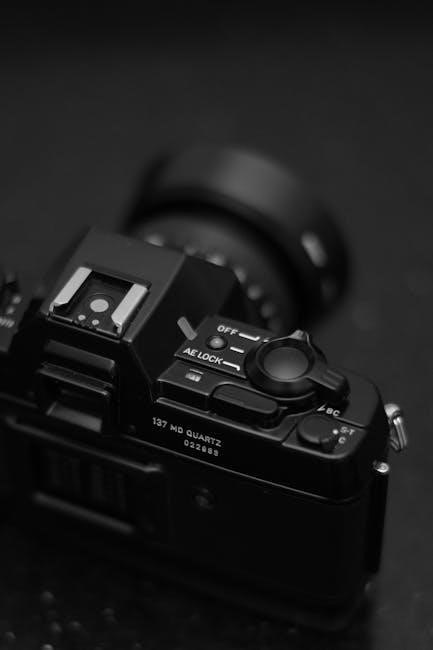
canon ae 1 instruction manual

Canon AE-1 Instruction Manual: A Comprehensive Guide

Dive into the world of classic photography! This manual explores the Canon AE-1, a camera blending robust build quality with accessible features for stunning results.

Welcome to the Canon AE-1 experience! Introduced in 1976, the AE-1 quickly became a favorite among photography enthusiasts, celebrated for its innovative Program mode and user-friendly design. This camera isn’t merely a nostalgic relic; it remains a capable and rewarding tool for modern photographers seeking a tactile, hands-on approach.

The AE-1’s appeal lies in its balance – a solid construction combining plastic and metal, resulting in a lightweight yet durable body (approximately 590g and sized like a small book). It utilizes the Canon FD mount, opening doors to a diverse range of lenses, including renowned options like the Canon FD 50mm f/1.8 and the FD 24mm f/2.8.

This guide will navigate you through every aspect of the AE-1, from understanding its controls and exposure settings to mastering practical shooting techniques. Prepare to rediscover the joy of film photography!

Understanding the Canon AE-1 Program Mode

The AE-1’s Program mode is a cornerstone of its accessibility. This mode simplifies exposure by automatically selecting both the shutter speed and aperture based on the camera’s internal metering. It’s an excellent starting point for beginners, allowing you to focus on composition and focusing without getting bogged down in technical details.

However, don’t underestimate the power of manual control! While Program mode is convenient, the AE-1 truly shines when you take charge of aperture and shutter speed. Experimenting with these settings unlocks creative possibilities, like achieving shallow depth of field with a wider aperture (lower f-stop like 1.8 or 2).

Remember, even in Program mode, understanding the relationship between aperture, shutter speed, and ISO is crucial. Bracketing exposures – taking multiple shots with slightly different settings – can help you fine-tune your results and ensure properly exposed images.

Key Features and Specifications

The Canon AE-1 is a 35mm SLR celebrated for its blend of innovation and user-friendliness. Its robust construction combines plastic and metal, resulting in a camera that feels solid and reliable, weighing in at approximately 590g with dimensions of 141 x 87 x 48 mm.

A defining feature is the Canon FD mount, offering compatibility with a diverse range of lenses, including the highly regarded Canon FD 50mm f/1.8 and the versatile FD 24mm f/2.8. The AE-1 boasts a horizontally-traveling cloth focal-plane shutter, providing shutter speeds from 2 seconds to 1/1000th of a second.

Metering is handled by a center-weighted averaging system, and the camera accepts both automatic and manual exposure control. It operates on a 4LR44/PX28 battery, powering both the metering system and the electronic shutter. Manual focusing is standard, offering a direct connection to the photographic process.

Camera Components & Controls

Explore the AE-1’s physical elements! Discover the body’s construction, the FD lens mount, shutter speed dial, aperture controls, and the manual focusing system.

Body Construction & Materials

The Canon AE-1 boasts a compelling blend of materials, contributing to its durability and comfortable handling. Its construction features a solid combination of plastic and metal components, achieving a balance between lightweight portability and robust build quality. Measuring 141 x 87 x 48 mm, the camera’s size is akin to a small book, making it relatively compact and easy to manage during shooting sessions.

Despite its solid feel, the AE-1 is surprisingly lightweight, tipping the scales at approximately 590g – lighter than many modern laptops. This manageable weight enhances its suitability for extended use and travel. While the specific plastic types used aren’t always prominently detailed, they contribute to shock absorption and overall resilience. The metal components, strategically incorporated, reinforce key structural areas, ensuring longevity and reliable operation. This thoughtful material selection reflects Canon’s commitment to producing a camera that could withstand the rigors of regular photographic practice.

Lens Mount (Canon FD Mount)

The Canon AE-1 utilizes the Canon FD (Focusing Design) lens mount, a defining characteristic that unlocks a vast and versatile world of lens options for photographers; This mount system, prevalent during the camera’s era, provides a secure and reliable connection between the camera body and a wide array of Canon FD lenses. The FD mount is known for its breech-lock design, requiring a twisting motion to lock and unlock lenses, a unique feature compared to bayonet mounts.

Photographers embracing the AE-1 can explore lenses like the highly-regarded Canon FD 50mm f/1.8, celebrated for its sharpness and affordability, or the wider perspective offered by the FD 24mm f/2.8. The FD mount’s compatibility extends to numerous lenses covering various focal lengths and apertures, allowing for creative flexibility. Adapters are also available, enabling the use of lenses from other manufacturers, further expanding the photographic possibilities with this classic Canon system.

Shutter Speed Dial & Operation

The Canon AE-1’s shutter speed dial is a crucial control for determining the duration of light exposure on the film. Located on the top of the camera body, this dial allows photographers to select shutter speeds ranging from 2 seconds to 1/1000th of a second, offering extensive control over motion blur and overall image brightness. Proper shutter speed selection is vital for capturing sharp images, especially when shooting handheld.

A general rule of thumb, often referred to as the “1/60 rule,” suggests using a shutter speed of at least 1/60th of a second to minimize camera shake when handholding the camera. Faster shutter speeds are necessary for freezing action, while slower speeds can create intentional motion blur. Understanding the interplay between shutter speed, aperture, and ISO is key to achieving well-exposed and creatively compelling photographs with the AE-1.

Aperture Control (Automatic & Manual)

The Canon AE-1 offers both automatic and manual aperture control, providing flexibility for various shooting scenarios. Aperture, indicated by ‘f-stops’ (like f/1.8, f/2.8, f/22), regulates the lens opening, influencing both the amount of light reaching the film and the depth of field – the area in focus. Smaller f-stop numbers (e.g., f/1.8) create a shallow depth of field, ideal for isolating subjects with a blurred background.

Larger f-stop numbers (e.g., f/22) yield a greater depth of field, keeping more of the scene in focus. While experienced photographers often prefer manual aperture control for creative effects, beginners can comfortably start with the automatic mode. This allows the camera to select an appropriate aperture based on the metering reading, simplifying the exposure process while learning the fundamentals of photography. Experimenting with different apertures is crucial for mastering the AE-1’s capabilities;

Focusing Mechanism (Manual Focus)

The Canon AE-1 relies on a classic manual focusing system, demanding direct engagement from the photographer; This involves rotating the focusing ring on the lens barrel until the subject appears sharpest within the viewfinder. Unlike modern autofocus systems, achieving precise focus requires practice and a keen eye. The AE-1’s viewfinder offers focusing aids – typically a split-image rangefinder – to assist in this process.

These aids divide the image, and sharpness is achieved when the two halves align. Mastering manual focus enhances your understanding of depth of field and fosters a deeper connection with the photographic process. While initially challenging, it provides greater control and creative possibilities than autofocus. Remember, consistent practice is key to achieving consistently sharp images with the AE-1’s manual focusing system.

Exposure Settings & Metering

Mastering light is crucial! This section details how the Canon AE-1’s metering system and adjustable settings work together to achieve properly exposed photographs.

ISO Setting & Film Speed

Understanding ISO is fundamental to correct exposure. The Canon AE-1 requires you to manually set the ISO to match the film loaded in the camera. This tells the camera’s metering system the film’s sensitivity to light. Common ISO values include 100, 200, and 400. Lower ISO films (like 100) are less sensitive, requiring more light, and producing finer grain. Higher ISO films (like 400) are more sensitive, allowing for shooting in lower light, but with more noticeable grain.

Accuracy is key! Ensure the ISO setting on the camera precisely matches the ISO of the film. An incorrect setting will result in consistently overexposed or underexposed images. If unsure, it’s always best to err on the side of caution and bracket your shots – taking multiple photos at slightly different exposure settings – to guarantee a properly exposed image. Remember to adjust the setting before loading the film!

Metering Modes Explained

The Canon AE-1 utilizes a center-weighted averaging metering system. This means the camera prioritizes the light levels in the center of the frame when calculating exposure. While not as sophisticated as modern multi-pattern metering, it’s effective for many shooting situations. The camera assesses the light and suggests aperture and shutter speed combinations for proper exposure.

Understanding its limitations is crucial. Scenes with strong backlighting or significant contrast can sometimes fool the meter. In these cases, exposure compensation (discussed elsewhere) becomes essential. The AE-1 doesn’t offer selectable metering patterns; it’s always center-weighted. Therefore, careful composition, ensuring the primary subject is within the central area, will yield the most accurate readings. Practice observing how the meter reacts to different lighting conditions to develop your intuition.

Exposure Compensation

The Canon AE-1’s exposure compensation dial is your ally when the camera’s meter is deceived. Situations like bright snow, dark subjects, or strong backlighting can cause the camera to underexpose or overexpose. This dial allows you to manually adjust the exposure the camera suggests, overriding its initial assessment.

The dial is marked with + and ー values, typically in stops. Each stop represents a doubling or halving of light. For example, +1 stop doubles the light, brightening the image, while -1 stop halves the light, darkening it. When shooting snow, a +1 or +2 stop compensation is often necessary. Conversely, dark subjects may require -1 or -2 stops. Bracketing shots – taking multiple images at different compensation levels – is a smart practice, especially when learning. This ensures you capture the correctly exposed image.

Bracketing Exposures for Optimal Results

Bracketing is a fundamental technique for ensuring a perfectly exposed photograph, especially with manual cameras like the Canon AE-1. It involves taking a series of shots of the same scene with varying exposure settings, centered around what your light meter suggests. This safeguards against inaccurate metering caused by challenging lighting conditions.

The process is simple: Take one shot at the meter’s recommended exposure. Then, take another at one stop faster (reducing light) and another at one stop slower (increasing light). This creates a “bracket” of exposures. Remember to only change the shutter speed or aperture, keeping the other constant. Reviewing these images allows you to select the best exposure or combine them in post-processing for High Dynamic Range (HDR) effects. Bracketing is particularly useful when dealing with high-contrast scenes or when you’re unsure about the accuracy of your meter.

Using the Viewfinder

The AE-1’s viewfinder provides crucial shooting information. It displays focusing aids and exposure settings, enabling precise composition and ensuring correctly exposed photographs every time.

Viewfinder Information Display

The Canon AE-1’s viewfinder is remarkably informative for a fully mechanical camera. Upon looking through it, you’ll immediately notice the split-image focusing spot in the center – a brilliant aid for achieving sharp manual focus. Surrounding this is a ring of LEDs that indicate exposure levels. These LEDs aren’t a precise meter reading, but rather a guide; a ‘+’ indicates overexposure, a ‘-‘ underexposure, and a ‘0’ suggests correct exposure according to the camera’s metering system.

Additionally, the viewfinder displays shutter speed information, which is particularly useful when shooting in Program mode. You’ll also find indicators for overexposure and underexposure warnings, helping you adjust settings for optimal results. Importantly, remember that the viewfinder shows the approximate field of view of the lens attached, allowing for accurate composition. Mastering the information presented within the viewfinder is key to unlocking the full potential of the Canon AE-1.

Focusing Aids in the Viewfinder

The Canon AE-1’s viewfinder excels in assisting manual focusing, a cornerstone of its operation. The primary aid is the split-image rangefinder located centrally. This ingenious system presents a slightly offset image; when the two halves align perfectly, your subject is in sharp focus. It takes practice, but quickly becomes intuitive. Surrounding the split-image is a microprism collar. This area, when the image is out of focus, appears grainy and swirling.

As you rotate the focus ring on your lens, observe how the microprism area clarifies and becomes less textured as your subject nears critical focus. These two systems work in tandem, providing both a precise and a more general indication of focus accuracy. Utilizing both the split-image and microprism collar will dramatically improve your success rate in achieving tack-sharp images with the Canon AE-1, especially when using fast lenses like the FD 50mm f/1.8.

Practical Shooting Techniques

Mastering the AE-1 means understanding aperture, shutter speed, and depth of field. Experiment with settings, bracket exposures, and maintain a 1/60 shutter speed for stability.

Achieving Shallow Depth of Field

Creating a beautifully blurred background, isolating your subject, is a hallmark of compelling photography. With the Canon AE-1, achieving shallow depth of field relies heavily on aperture control. Remember, a smaller f-stop number – like f/1.8 or f/2 – opens the aperture wider, allowing more light in and drastically reducing the area in focus.

This technique is perfect for portraits or highlighting specific details. The lower the f-stop, the more pronounced the blur will be, effectively separating your subject from its surroundings. Experiment with different apertures to see how they affect the overall image. While automatic aperture is available, manual control offers greater creative freedom.

Consider your subject’s distance; closer subjects naturally have a shallower depth of field. Also, remember that a longer focal length lens will further compress the depth of field, enhancing the blur. Practice and observation are key to mastering this artistic element!

Understanding & Utilizing Depth of Field

Depth of field (DoF) is the distance within a photograph that appears acceptably sharp. Mastering DoF is crucial for controlling what your viewer focuses on. A narrow DoF, achieved with a wide aperture (low f-number like f/2.8), isolates the subject against a blurred background, drawing attention directly to it. Conversely, a large DoF, using a smaller aperture (high f-number like f/22), keeps both foreground and background sharp.

Utilizing DoF creatively allows you to tell a story. For landscapes, a large DoF ensures everything is in focus, showcasing the scene’s grandeur. For portraits, a shallow DoF creates a pleasing aesthetic and separates the subject. Remember, factors like aperture, focal length, and subject distance all influence DoF.

Experiment with different settings on your Canon AE-1 to understand how they interact and impact the final image. Practice visualizing the resulting DoF before taking the shot!

Minimum Shutter Speed for Handheld Shooting (1/60 Rule)

To avoid camera shake and blurry images when shooting handheld with your Canon AE-1, a general rule of thumb is to use a shutter speed of at least 1/60th of a second. This speed helps counteract the natural movement of your hands during exposure. However, this is a guideline, and several factors can influence the required speed.

Your focal length plays a significant role. Longer lenses magnify movement, requiring faster shutter speeds. If using a longer lens, increase the shutter speed accordingly (e.g., 1/125th or faster). Your stability also matters; if tired or unsteady, increase the speed.

Experiment to find what works best for you. Start with 1/60th and assess sharpness. If blurry, increase the speed. Remember, a faster shutter speed requires more light, potentially necessitating a wider aperture or higher ISO.

Lens Options: Canon FD 50mm f/1.8 & FD 24mm f/2.8

The Canon FD mount system offers a diverse range of lenses for your AE-1, but two popular choices for beginners are the FD 50mm f/1.8 and the FD 24mm f/2.8. The 50mm f/1.8 is often called a “nifty fifty” due to its affordability and versatility. Its wide aperture (f/1.8) excels in low light and creates a beautiful shallow depth of field, ideal for portraits and isolating subjects.

The FD 24mm f/2.8, on the other hand, provides a wider angle of view, perfect for landscapes, architecture, and situations where you need to capture more of the scene. While not as fast as the 50mm, its f/2.8 aperture still allows for decent low-light performance. Both lenses are manual focus, encouraging deliberate and precise focusing techniques.

Troubleshooting & Maintenance

Keep your AE-1 functioning flawlessly! Address common issues, learn proper battery replacement, and master cleaning/storage techniques for lasting performance and enjoyment.

Common Issues & Solutions

Exposure Problems: If your photos are consistently over or underexposed, double-check the ISO setting to ensure it matches your film’s speed. A mismatch here is a frequent culprit. Bracketing exposures – taking shots at slightly different settings – is a fantastic troubleshooting technique. Shoot one at the meter’s suggestion, one faster, and one slower to pinpoint the correct exposure.

Shutter Issues: A sticky shutter can result in inconsistent exposures. Gently exercising the shutter speed dial through its range can sometimes resolve this. If the problem persists, professional cleaning might be necessary.

Viewfinder Darkness: A dim viewfinder can make focusing difficult. Ensure the aperture is open sufficiently to allow light through the lens. Also, check the lens for cleanliness.

Film Advance Problems: If the film isn’t advancing, ensure it’s loaded correctly and the film leader is properly engaged with the take-up spool. Avoid forcing it!

Battery Replacement & Type

The Canon AE-1 Program utilizes a 4LR44 or PX28 battery to power its electronic functions, primarily the light meter. While the camera can operate mechanically without a battery, features like aperture-priority auto mode and the viewfinder’s metering display will be unavailable. Battery life varies depending on usage, but expect several months of typical shooting.

To replace the battery, locate the battery compartment on the bottom of the camera. Use a small screwdriver to open the compartment cover. Carefully remove the old battery, noting its orientation. Insert the new battery, ensuring the positive (+) and negative (-) terminals align correctly. Secure the compartment cover tightly.

Important Note: Avoid mixing old and new batteries. Always use a reputable brand for reliable performance. A weak battery can lead to inaccurate metering and unreliable camera operation. Consider carrying a spare battery for extended shooting sessions.

Cleaning & Storage

Proper cleaning and storage are crucial for maintaining your Canon AE-1’s functionality and longevity. Regularly use a soft, dry cloth to wipe down the camera body, removing dust and fingerprints. Avoid harsh chemicals or abrasive cleaners, as these can damage the finish.

For the lens, use a lens brush to remove loose dust, followed by lens cleaning tissue and a dedicated lens cleaning solution. Gently wipe in a circular motion. Store the camera in a cool, dry place, away from direct sunlight and extreme temperatures. A camera bag or case provides excellent protection against dust, moisture, and accidental impacts.

Long-Term Storage: Remove the battery to prevent corrosion. Store the camera with the shutter release button depressed to relieve tension on the shutter mechanism. Periodically check the storage location for signs of mold or mildew.

Film Loading & Unloading

Loading film into your Canon AE-1 is a straightforward process; First, open the camera back using the film release lever. Insert the film canister into the left-hand side, ensuring it clicks into place. Pull the film leader across the camera and thread it onto the take-up spool on the right. Advance the film using the winding lever, checking that the sprocket holes are properly engaged.

Close the camera back firmly. The film counter will automatically begin to display the number of exposures remaining. To unload the film, press the film rewind button on the bottom of the camera and turn the rewind crank in the direction of the arrow until the film is fully retracted. Open the camera back and remove the film canister.

Important Note: Avoid loading or unloading film in direct sunlight to prevent fogging.

legacy 850 manual

Legacy 850 Manual: A Comprehensive Overview (Updated 02/01/2026)

This official manual details operation and maintenance for Overhead Door Standard Drive 650 and Legacy 850 models; It covers installation, programming, troubleshooting, and specifications․

The Legacy 850 represents a robust and reliable solution for residential garage door operation, offered by Overhead Door․ This opener is designed for sectional doors, accommodating heights up to 8 feet and weights reaching 500 pounds․ It’s available in both belt and chain drive configurations, providing options for varying noise level preferences and operational needs․

This manual serves as a comprehensive guide, detailing everything from initial installation to ongoing maintenance and troubleshooting․ The Legacy 850 is engineered to exceed Overhead Door’s lifting force specification for ½ horsepower openers, ensuring powerful and consistent performance․ Understanding its features and adhering to the safety precautions outlined within are crucial for optimal functionality and longevity․

Furthermore, the Legacy 850 boasts compatibility with Homelink systems and offers service dialing capabilities․ This opener is backed by a limited, non-transferable warranty – details of which are thoroughly explained in the complete owner’s manual․ Proper use and maintenance, as described herein, will maximize the benefits of your Legacy 850․

Key Features and Specifications

The Legacy 850 Garage Door Opener distinguishes itself through several key features․ It’s designed for use with standard residential sectional doors, supporting heights up to 8 feet and a maximum weight of 500 pounds․ Users can select between a belt drive system – known for quiet operation – or a chain drive for a more economical option․

A significant specification is its ability to exceed Overhead Door’s lifting force requirements for ½ horsepower openers, guaranteeing reliable performance․ Compatibility with Homelink wireless control systems simplifies integration with vehicle-based remote access․ The opener also includes service dialing functionality, enabling connection to Overhead Door’s support network․

Furthermore, the Legacy 850 incorporates a submodule C4E1, utilized for service number identification․ Access to additional resources, including the MSI Center manual, is available via a downloadable PDF or a convenient QR code․ This opener is covered by a limited, non-transferable warranty; full details are provided in the owner’s manual․

Safety Precautions and Warnings

Prior to installing or servicing the Legacy 850, disconnect the power supply to prevent electrical shock and accidental operation․ Never allow children to operate the opener or play near the door․ Regularly inspect the door’s balance system – a malfunctioning spring can cause serious injury․

Ensure the safety reversal system is functioning correctly by testing it monthly․ This system should immediately stop and reverse the door’s travel upon encountering an obstruction․ Do not attempt to adjust or disable this crucial safety feature․ Keep the area around the opener clear of obstructions that could interfere with its operation․

Always follow all instructions outlined in this manual․ Improper installation or modification can compromise safety and void the warranty․ If you are uncomfortable performing any aspect of the installation or maintenance, consult a qualified professional․ Be aware of potential pinch points during operation and keep hands clear․

Installation Guide

Proper installation is crucial for safe and reliable operation․ This guide details preparing for installation, mounting the unit, attaching the rail, and connecting the door brackets․

Preparing for Installation

Before beginning the installation of your Legacy 850 garage door opener, careful preparation is essential for a smooth and safe process․ First, ensure the garage door itself is balanced correctly; a poorly balanced door can cause serious injury or damage to the opener․ Disconnect the existing garage door opener, if applicable, and manually operate the door to verify its balance․

Next, gather all necessary tools, including a ladder, wrenches, screwdrivers, and potentially a drill․ Review the included parts list to confirm all components are present․ Clear the area beneath the installation point of any obstructions․ The Legacy 850 is designed for use with residential sectional doors up to 8 feet high and weighing up to 500 pounds․ Confirm your door meets these specifications․ Finally, familiarize yourself with all safety precautions outlined in the manual before proceeding․

Mounting the Opener Unit

Securely mounting the Legacy 850 opener unit is crucial for stable and reliable operation․ Begin by positioning the opener unit on the mounting rails, ensuring it’s centered above the door․ Utilize the provided hardware to firmly attach the rails to ceiling joists or a properly reinforced header․ It’s vital to use appropriate fasteners for your ceiling construction – wood screws for wood joists, lag screws with washers for steel, and consult a professional if unsure․

Double-check the unit’s alignment, ensuring it’s level and doesn’t interfere with door travel․ The Legacy 850 exceeds Overhead Door’s lifting force specification for a ½ horsepower opener, so robust mounting is paramount․ Verify the mounting structure can support the opener’s weight plus the weight of the door․ Tighten all bolts and screws securely, but avoid over-tightening, which could strip the threads․

Attaching the Rail System

Proper rail system attachment is fundamental to the Legacy 850’s smooth and efficient operation․ Begin by assembling the rail sections according to the diagram in the installation guide․ Ensure all connections are secure before proceeding․ Carefully align the assembled rail with the mounted opener unit, sliding it into the receiver tube․

Secure the rail to the opener unit using the provided bolts and washers, tightening them firmly․ Next, support the rail’s length with intermediate hangers, spaced evenly along its run․ These hangers must be securely fastened to ceiling joists, utilizing appropriate hardware for your ceiling type․ Confirm the rail is level and free from obstructions․ The Legacy 850 is designed for residential sectional doors up to 8ft high, so correct rail length is vital; Double-check all connections before proceeding to the next step․

Connecting the Door Brackets

Securely attaching the door brackets is crucial for transferring the Legacy 850’s power to your garage door․ Begin by positioning the curved door arm bracket on the door itself, ensuring it’s centered and at the correct height – typically a few inches below the crown of a sectional door․ Use the supplied bolts to firmly attach the bracket to the door, reinforcing existing door structure where necessary․

Next, install the straight door arm bracket to the door panel above․ This bracket connects to the curved arm, facilitating the lifting motion․ Align both brackets carefully, ensuring smooth movement without binding․ Connect the door arm to both brackets using the provided connecting hardware, tightening all bolts securely․ Verify the door moves freely and evenly․ The Legacy 850 is compatible with doors up to 500lbs, so bracket integrity is paramount․

Programming and Setup

Proper programming ensures seamless operation of your Legacy 850․ This involves setting travel limits, programming remote controls, and establishing Homelink compatibility for convenient access․

Setting the Travel Limits

Accurate travel limit adjustments are crucial for safe and efficient garage door operation with your Legacy 850 opener․ These limits define how far the door opens and closes, preventing potential damage to the door, opener, or surrounding objects․ Begin by disconnecting the door from the opener using the emergency release cord – always ensure the door is fully supported․

Manually operate the door to the desired fully open and fully closed positions․ Then, re-engage the opener․ Utilize the adjustment knobs on the opener unit, typically labeled “Up” and “Down,” to fine-tune the travel limits․ Small adjustments are recommended; observe the door’s movement after each adjustment․

The goal is to achieve a complete opening without excessive travel and a secure closure without reversing prematurely․ Repeat the process until the door operates smoothly and reliably within the set limits․ Refer to the detailed diagrams in the full manual for specific knob locations and adjustment procedures․ Incorrectly set limits can compromise safety and performance․

Programming the Remote Controls

Adding remote controls to your Legacy 850 garage door opener is a straightforward process, enhancing convenience and security․ Begin by locating the “Learn” or “Program” button on the opener unit – its position may vary, so consult the full manual’s diagrams․ Press and release this button; a small indicator light will illuminate, signaling the opener is in programming mode․

Within 30 seconds, press and hold the desired button on the remote control you wish to program․ The indicator light on the opener should blink or change color, confirming successful programming․ Repeat this process for each additional remote control․

If programming fails, ensure the remote has fresh batteries and is within range of the opener․ Some models may require clearing existing codes before adding new ones․ Refer to the troubleshooting section of the manual for assistance․ Properly programmed remotes provide secure access and eliminate the need for manual operation․

Homelink Compatibility and Programming

The Legacy 850 garage door opener is designed for seamless compatibility with Homelink Wireless Control Systems, found in many vehicles․ To program Homelink, begin by pressing the “Learn” button on your Legacy 850 opener, initiating programming mode – indicated by an illuminated light․

Next, within the specified timeframe (typically 30 seconds), press and hold both the Homelink button in your vehicle and a programmed button on your Legacy 850 remote simultaneously․ Watch for the indicator light on the opener to change, signaling successful communication․

If the light doesn’t respond, try different combinations or ensure a clear line of sight․ Consult your vehicle’s Homelink manual for specific instructions․ Successful programming allows convenient garage door operation directly from your car․ Detailed guidance and troubleshooting steps are available within the complete Legacy 850 owner’s manual․

Service Dialing and Troubleshooting

The Legacy 850 incorporates a “Service Dialing” feature, enabling remote diagnostics and assistance from Overhead Door service professionals․ This function relies on the submodule C4E1, which facilitates communication for service number calls (ДВО – as noted in documentation)․ If C4E1 is absent, a “Submodule C4E1” error message will appear, hindering service dialing capabilities․

Troubleshooting common issues often begins with verifying power supply and remote control batteries․ If the door doesn’t respond, check travel limits and ensure no obstructions are present․ For more complex problems, consult the detailed troubleshooting section within the owner’s manual․

Further support and resources, including a comprehensive MSI Center manual, are accessible via http://download․msi․com/manual/mb/MSICENTER․pdf or by scanning the provided QR code․ Remember, functions may vary, so always refer to the latest documentation․

Maintenance and Troubleshooting

Regular maintenance extends the Legacy 850’s lifespan․ This section details routine procedures, common issue resolution, belt/chain drive differences, and worn part replacement guidance․

Routine Maintenance Procedures

To ensure optimal performance and longevity of your Legacy 850 garage door opener, consistent routine maintenance is crucial․ Begin by visually inspecting the entire system monthly, checking for loose bolts, frayed cables, and any signs of damage to the rail, brackets, and door itself․ Lubricate all moving parts – including the chain or belt, rollers, hinges, and springs – with a suitable garage door lubricant․ Avoid using grease, as it attracts dirt․

Periodically test the safety features, such as the safety reversal system, by placing a one-inch object in the door’s path while closing․ The door should immediately reverse․ Inspect the photo-eye sensors, ensuring they are aligned and free from obstructions․ Clean the sensors with a soft cloth․ Finally, examine the opener’s logic board for any visible signs of wear or damage․ Following these simple procedures will help prevent costly repairs and maintain safe, reliable operation․

Troubleshooting Common Issues

If your Legacy 850 experiences problems, several common issues can be easily addressed․ A door that won’t close may indicate obstruction of the safety sensors – verify alignment and cleanliness․ If the door reverses unexpectedly, adjust the force settings (refer to the ‘Setting the Travel Limits’ section)․ A malfunctioning remote control often requires reprogramming; ensure fresh batteries are installed first․

For service dialing issues (accessing services via submodule C4E1), confirm the module is present and functioning correctly․ If the opener hums but doesn’t move, check for a jammed rail or a disconnected drive belt/chain․ Unusual noises could signal worn rollers or springs requiring replacement․ Remember to disconnect power before any inspection or repair․ If problems persist, consult the full manual or a qualified technician․

Belt vs․ Chain Drive: Maintenance Differences

The Legacy 850 is available with either belt or chain drive systems, each requiring slightly different maintenance approaches․ Chain drives, while durable, necessitate periodic lubrication to prevent rust and ensure smooth operation – typically every six months․ Inspect the chain for wear and tension regularly․ Belt drives, conversely, generally require less frequent lubrication, often only when noticeable squeaking occurs․

Belts are quieter but can stretch over time, potentially requiring adjustment or replacement․ Chain drives are louder but offer greater longevity․ Both systems benefit from regular visual inspections for damage or wear on the rail, brackets, and connecting hardware․ Proper alignment is crucial for both to minimize stress and extend component life․ Always disconnect power before performing any maintenance․

Identifying and Replacing Worn Parts

Regular inspection is key to identifying worn parts in your Legacy 850․ Look for cracks or fraying on the belt or chain, excessive wear on the rail, and loose or damaged brackets․ A noisy operation often indicates worn rollers or bearings․ Inspect the door itself for damaged hinges or sections․ Before replacing any part, always disconnect the power to the opener․

Replacement parts can be sourced through Overhead Door distributors or authorized service providers․ Refer to the parts diagram in this manual for accurate identification․ When replacing the belt or chain, ensure proper tensioning․ Damaged sensors should be replaced in pairs for optimal safety․ If unsure about any repair, consult a qualified technician to avoid injury or further damage․

Technical Specifications

The Legacy 850 features a 1/2 horsepower motor, handling doors up to 8ft tall and 500lbs․ It boasts a limited, non-transferable warranty – see manual for details․

Motor Specifications (1/2 Horsepower)

The Legacy 850 garage door opener utilizes a robust ½ horsepower motor, designed to deliver reliable performance for residential applications․ This motor provides sufficient power to efficiently operate sectional doors, ensuring smooth and consistent lifting and lowering cycles․ It’s engineered to exceed Overhead Door’s lifting force specification for comparable ½ horsepower openers, indicating a higher level of operational capability․

This motor is specifically chosen for its balance of power and efficiency, contributing to a longer lifespan and reduced energy consumption․ The design incorporates features to minimize noise during operation, enhancing the overall user experience․ Regular maintenance, as outlined in this manual, is crucial for maintaining optimal motor performance․ The motor’s specifications are carefully calibrated to work seamlessly with the Legacy 850’s drive system, whether belt or chain driven, ensuring consistent and dependable operation for years to come․

Door Weight and Height Limitations (Up to 8ft, 500lbs)

The Legacy 850 garage door opener is engineered for compatibility with standard residential sectional doors, specifically those not exceeding 8 feet in height and 500 pounds in weight․ Exceeding these limitations can compromise the opener’s performance, potentially leading to damage or safety hazards․ It’s crucial to verify your door’s weight and height before installation to ensure proper operation and prevent strain on the motor and drive system․

Doors taller than 8 feet or heavier than 500lbs may require a more powerful opener or additional reinforcement․ Proper balancing of the door is also essential; an unbalanced door places undue stress on the opener․ This manual provides guidance on assessing door balance․ Adhering to these weight and height restrictions ensures the Legacy 850 delivers reliable and safe operation, maximizing its lifespan and protecting your investment․ Always prioritize safety and consult a professional if unsure․

Warranty Information (Limited, Non-Transferable)

The Legacy 850 garage door opener is backed by a limited warranty, providing peace of mind to the original purchaser․ This warranty covers defects in materials and workmanship under normal use for a specified period, detailed within the complete owner’s manual․ Please retain your proof of purchase, as it is required for all warranty claims․

Important Note: This warranty is strictly non-transferable, meaning it applies only to the initial buyer and does not extend to subsequent owners of the property or the opener itself․ The warranty does not cover damage resulting from improper installation, misuse, neglect, unauthorized modifications, or acts of nature; Refer to the full owner’s manual for complete warranty terms, conditions, and limitations․ For detailed information and claim procedures, consult the documentation included with your Legacy 850․

Advanced Features & Considerations

The Legacy 850 exceeds Overhead Door’s lifting force specification and is compatible with residential sectional doors․ Submodule C4E1 enables service dialing; access the MSI Center via QR code․

Overhead Door Lifting Force Specification

Understanding the Legacy 850’s lifting force is crucial for optimal performance and longevity․ This opener is specifically designed to exceed the Overhead Door specification for ½ horsepower garage door openers, ensuring reliable operation even with moderately heavy doors․ This specification guarantees the motor can consistently and safely lift doors within the recommended weight and height limitations․

Meeting this standard isn’t merely about power; it’s about safety and preventing strain on the opener’s components․ Exceeding the specification means the Legacy 850 is built with a robust motor and drive system capable of handling demanding lifting tasks․ It also contributes to a smoother, quieter operation, reducing wear and tear over time․

Properly assessing your door’s weight and balance is essential before installation․ Doors exceeding the 500lb limit or 8ft height may require a more powerful opener, potentially voiding the warranty․ Always consult the full owner’s manual for detailed guidelines and safety precautions related to lifting force and door compatibility․

Compatibility with Residential Sectional Doors

The Legacy 850 garage door opener is engineered for seamless integration with standard residential sectional doors․ It’s specifically designed for use with doors up to 8 feet in height and weighing a maximum of 500 pounds․ This compatibility ensures reliable and safe operation for the vast majority of homes․

Sectional doors, constructed from hinged panels, benefit from the Legacy 850’s smooth and consistent lifting force․ The opener’s design accommodates the unique movement of these doors, providing optimal performance throughout their entire travel range․ However, it’s vital to verify your door’s specifications before installation․

Doors outside the recommended height or weight limits may require a different opener model or additional reinforcement․ Improper installation with an incompatible door can lead to operational issues, safety hazards, and potential warranty voidance․ Always refer to the comprehensive owner’s manual for detailed compatibility guidelines and professional installation recommendations․

Understanding Submodule C4E1 (Service Numbers)

Submodule C4E1 within the Legacy 850 system is crucial for accessing and utilizing service dialing features․ This function allows the opener to automatically contact pre-programmed service numbers in the event of specific operational issues or emergencies, offering enhanced support․

If the C4E1 submodule is absent or malfunctioning, the system will display a “Submodule C4E1” error message, indicating a loss of service dialing capability․ Proper functionality requires the submodule to be correctly installed and configured․ This ensures reliable communication with designated service providers․

Users can find detailed instructions on programming and managing service numbers within the comprehensive owner’s manual․ Additionally, resources are available online at http://download․msi․com/manual/mb/MSICENTER․pdf, or by scanning the provided QR code․ Remember that functionality may vary depending on your specific configuration and service provider agreements․

MSI Center Manual & QR Code Access

For comprehensive support and detailed information regarding your Legacy 850 garage door opener, MSI provides accessible resources through the MSI Center Manual․ This digital manual offers an expanded repository of knowledge beyond the printed owner’s manual, covering advanced features, troubleshooting, and frequently asked questions․

Accessing the MSI Center Manual is streamlined through a convenient QR code․ Simply scan the code with your smartphone or tablet camera to instantly redirect to the online resource at http://download․msi․com/manual/mb/MSICENTER․pdf․ This eliminates the need for manual searches and ensures quick access to vital information․

Please note that functions and features may be subject to change based on software updates and specific model configurations․ Regularly checking the MSI Center Manual ensures you have the most current and accurate information for optimal performance and maintenance of your Legacy 850 opener․